

Not long ago, I glanced through an old email account that I was trying to shut down. Here’s a sample of messages that had arrived within a few hours of each other:
- “What just happened inside the White House will shock you . . .”
- “Tax Review Notice: Action May Be Required . . .”
- “Caught on Camera: Strange Discovery on Mars.”
You get the idea. Obviously, that account needed a better spam filter.
Our society is swimming in information, much of it unreliable and a disturbing amount of it harmful. We get texts from “employers” offering high wages for easy work and phone calls from robots posing as well-meaning tax advisers. Our workplaces require cybersecurity training to filter out insidious attempts to hold their data ransom.
Is it any wonder that when non-Christians hear Christians talk about the gospel, they sometimes look skeptically on their message of good news? Christians, too, can bounce around in a sea of doubt, jostled by waves of dubious religious claims. In this flood tide of false information, we should think about what makes the gospel, with its dramatic claims about peace with our loving Creator, stand out as true.
When Paul writes from prison to the Christians in Ephesus in the first century, he addresses a group of believers who, like us, live in a world overwhelmed with false information. They too can be “tossed to and fro by the waves and carried about by every wind of doctrine” or be taken in by “human cunning, by craftiness” for the purpose of “deceitful schemes” (4:14).
Paul seems to write to them, at least in part, to provide them with much-needed reorientation. With the shifting winds of disinformation blowing strong, he wants to remind them of their identity in Christ and of the way of life this identity entails. We need these reminders too.
New Society at the Beginning of the New Creation
So who are we as Christians? Paul makes it clear in Ephesians that our identity comes from our union with Christ and with one another in a new society. This new society is the prototype of human society in the new creation. Paul tells the Ephesian Christians that he prays God would open the eyes of their hearts to what God is doing in them by means of the immense power he has given to them (1:18–23).
The power at work within them is the power that raised Christ from the dead and seated him in a place of victory over all God’s enemies. That power is also the means through which God “put all things under [Christ’s] feet” (v. 22).
Our identity comes from our union with Christ and with one another in a new society.
This line comes from Psalm 8:6. There, the psalmist expresses his amazement that, in all the vastness of the universe, God gives dominion over his creation to seemingly insignificant “man” (vv. 3–4). As odd as it seems, God places humanity over everything he created.
When Paul alludes to this psalm in Ephesians 1:22, he may be implying that at Christ’s resurrection, God gave this position of dominance to one man in particular—Christ. In the process, God recognized Christ as victor over “all rule and authority and power and dominion,” (v. 21)—forces that, as Paul makes clear later in the letter, are evil powers (6:12).
Paul implies this dominion over creation and over the powers of evil belongs through Christ to the church: God also “gave [Christ] as head over all things to the church” (1:22). God is restoring humanity’s rightful dominion over creation, lost and perverted when Adam and Eve rebelled against him, through the church’s union with Christ. The church is the first step in God’s restoration of the created order.
Become God’s New Creatures and Citizens of a New Society
In the next two paragraphs of his argument, Paul shows how God is doing this (2:1–10, 11–22). First, God is rescuing a group of people from their “trespasses and sins,” the result of their willingness to follow “the course of this world,” “the prince of the power of the air” (vv. 1–3). This rescue happens when God unites sinful people with the living, risen, and ascended Christ and seats them “with him in the heavenly places” (vv. 5–6). Paul sums this up by alluding once again to God’s creation of humanity.
This rescued community, Paul says, is God’s “workmanship” that he “created.” He created this group to live in step with the “good works [that] God prepared beforehand, that we should walk in them” (v. 10). God’s people are newly restored creatures, empowered to do the good God intended for all human beings when he created them.
Second, Paul argues that God has created this new community out of people from formerly hostile social groups (vv. 11–12). He has reconciled to himself groups that used to identify—and exclude—each other based on ethnicity. He has “broken down . . . the dividing wall of hostility” between them so that “he might create in himself one new man in place of the two, so making peace” (vv. 14–15).
This new people Paul imagines as a temple whose foundation is the apostles and prophets and whose most important stone is “Christ Jesus himself” (v. 20). The building blocks of that temple are the individuals drawn from all social groups who make up God’s newly created people and who are now closely joined together in unity (vv. 21–22).
Make It Practical—and Credible
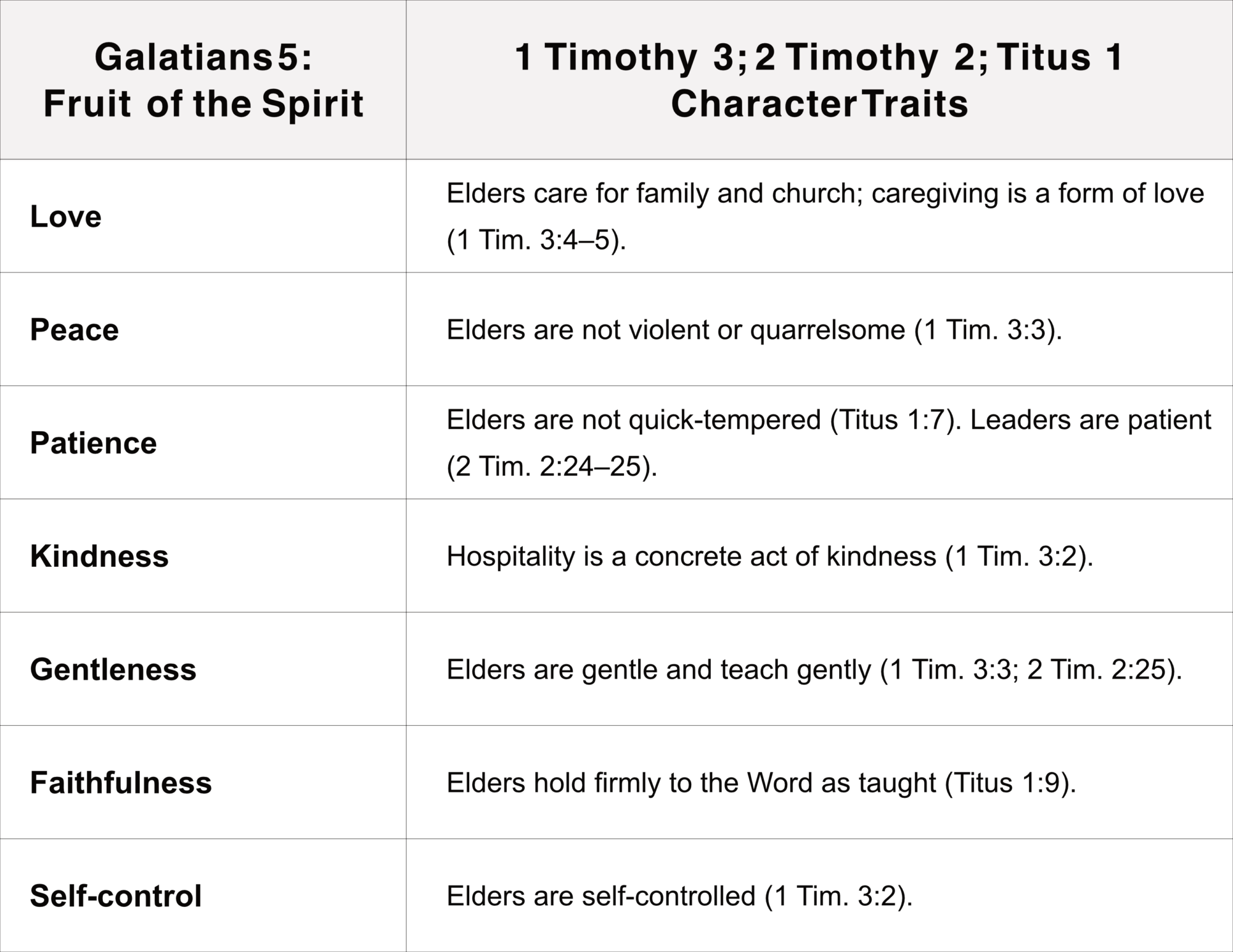
Later in the letter, Paul makes this glorious but abstract image more concrete: Living together as God’s newly created and unified people entails humility, gentleness, patience, and bearing with one another in love (4:1–2). Putting off the old human being and putting on the new human being “created after the likeness of God” (vv. 22–24) means controlling one’s anger, working honestly and giving generously to others, speaking graciously rather than with malice, and not lying to one another (vv. 25–31).
God’s people are newly restored creatures, empowered to do the good God intended for all human beings when he created them.
In short, it means imitating Jesus’s kindness and God’s love (4:32–5:1), something that makes sense for people created in God’s image (Gen. 1:27).
Who are we as Christians? We’re the beginning of God’s restored human creation. God has called us to live in loving unity with each other across all kinds of national, ethnic, and social boundaries and so to bear witness to the beautifully complex wisdom of the God “who created all things” (3:9–10).
In a world of confusing, competing, and often false truth claims, the church’s willingness to be “imitators of God” by “walking in love” will give credibility to a gospel message that would otherwise seem too good to be true.