
…His many wives, children and the stage
…Says, ‘I was withdrawn from school to join his theatre company at the age of 14’
…’My mission is to reclaim his legacy’
By Benjamin Njoku
Hubert Ogunde, the father of modern Nigerian Theatre Arts, passed away in the 90s, leaving behind a lasting impact on the industry. His contributions to Nigerian theatre continue to resonate with audiences, and many believe his exit created a void that remains unfilled.
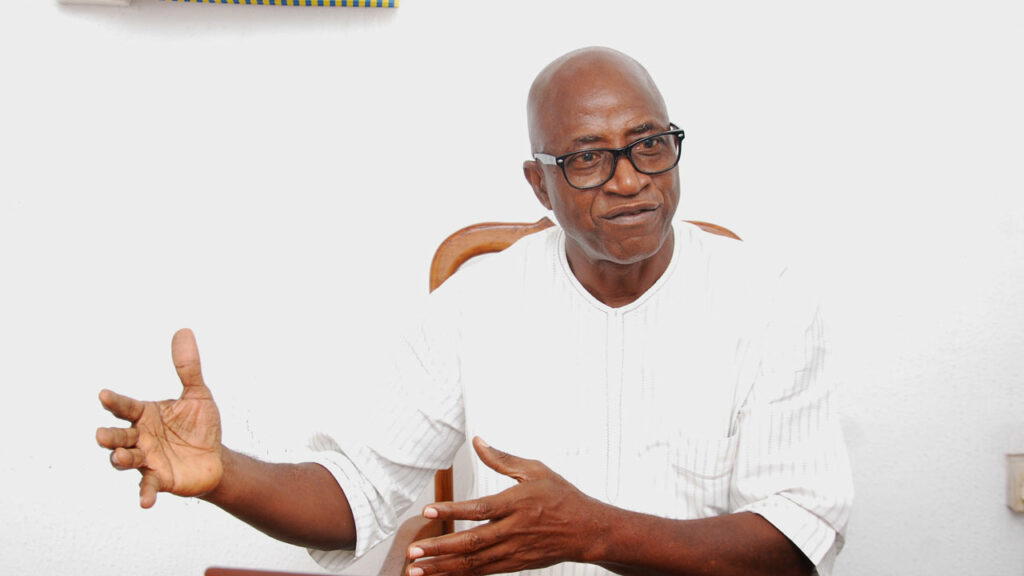
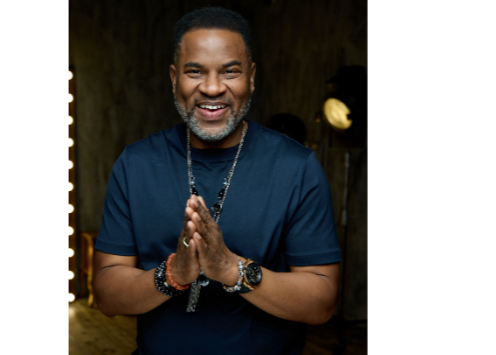
Now, his UK-based son, Owobo, is ready to reclaim his father’s legacy. After a recent comeback performance in the Netflix series “Anikulapo: Rise of the Spectre,” Owobo opens up about his life as a child of artists, working with his father, and his decision to travel to the UK in 1992.
Will you say your re-emergence on the scene has signified that Hubert Ogunde, the doyen of modern Nigerian theatre, is still alive?
Hubert Ogunde is still alive; he has always been alive. I grew up in Nigeria, and I have been working in space throughout my life. I existed long before most of the stars whom you know today in the industry. Ogunde can never die; he had 26 children and 14 wives, with many great grandchildren. Ogunde’s family is almost bigger than a big village. I am the last son of Ogunde. I have two sisters, and my mother had two other wives behind her who had one daughter each.
As a son of Ogunde, do you in any way see acting as a birthright?
No, I don’t see acting as a birthright because not all Ogunde’s children are into show business. In fact, not all of them are cut out for showbiz. Some of us took after him, while some fell by the wayside without even trying at all. I was born a performer. There are aspects of art that you are born with: the voice, the face, the ability, and the likability. All of these features are natural talents you have to be born with. Then, there’s the training you have to take: how to walk on stage and how to act. People who hit the top of their acting careers have something that cannot be taught by anybody.
Are you actually disturbed that your late father’s legacy hasn’t been sustained by his children?
I’m not disturbed at all, and there’s a reason for that. My father died in 1990; I was working for him and with him at the time. I travelled to the UK in 1992, and I returned to Nigeria 30 years later to star in Kunle Afolayan’s critically-acclaimed film, “Anikulapo: Rise of Spectre.” Can you remember any big actor in Nigeria who left the scene and returned at least 10 years later, and people still remember him? It’s almost impossible. The point I’m trying to make is, that’s the enduring legacy of Ogunde. That means Ogunde can be gone and would return as if he never left. Ogunde was a brand that’s almost instilled in people’s minds. There’s an explosive population in Nigeria that will have to die for Ogunde to die. Remember that as an undergraduate of Theatre Arts, you are studying Ogunde during your first year in university. These are the reasons I can be gone and return as if I never left. No Nigerian actor can do that. I’m not worried about that in any way.
Is Ogunde’s family active in the Nigerian theatre scene?
No, and that’s one of the things I’m coming back to correct. My comeback is not about jumping from one movie set to another. It’s about how to ensure that some of the biggest things we have in Nigeria in terms of arts and culture are not lost. What I have observed in the industry today is that a huge number of people believe that arts in Nigeria started after the advent of social media. That’s bad; Nigeria is the only country in the world where we don’t pay attention to history. History matters a lot, and this is because we are making films today that are not as good as the ones that were made in the 80s. The reason is that we didn’t go back to learn from our past works. People who are making films today didn’t start from scratch. They didn’t start by trying to find out how Ogunde did it. He was the biggest name in the industry during his time. When you study his works, you would find out what made him the best. You can say if Ogunde did that, I can build on it. And if we start to build on the works of our past, then we are on the road to making progress in our storytelling craft. That’s how we can move forward. So, one of the things I want to achieve is to bring back how “we used to do things.” When I hit a movie location recently, I found out that nobody does rehearsals anymore. Ogunde prioritized rehearsals. You can’t just act in any of Ogunde’s productions. It’s through repeating things that you create new things. Repetition is a key word in acting. When you are acting, that’s when you are repeating your lines, and that’s when you come up with new ideas on how to do it differently. Unfortunately, we don’t do rehearsals anymore.
Are you saying that you are bringing back your late father’s travelling theatre group?
Travelling theatre is a very hard thing to do. You will remember that towards the end of his journey, Ogunde delved into film production. He did some performances before he delved into filmmaking. I would love to do theatre again, but not the way Ogunde did it. I will produce films and some command performances when the time is right.
How has Ogunde’s legacy influenced your early acting career?
Not just my early acting career, but also my acting, because when I was returning to acting, one of the things I did was to understudy him and my mother again. My father was less expressive in his acting. That’s because he was a very grounded person, and when you are grounded, you wouldn’t need a lot of expression because it would be too much. But my mother was very expressive in her acting. Remember, I grew up watching them on stage. They taught me discipline and how to act. In Ogunde’s theatre, you don’t start acting immediately. Before you are allowed to come close to acting, the first thing you would learn is dance. The first thing I learned when I joined my father’s theatre company was actually how to play drums, before moving on to dance and later, acting. When you attend an Acting School in London, they call it movement. The reason they do movement is that it helps you to loosen your body. That’s when I understood why my father would start his performances with dance. It helps you to loosen your body, and it’s also through dance that you learn stage movement. Most of the people who watched Anikulapo often talked about how I carried myself and walked on screen. There were things I learned from Ogunde.
What kind of father was Ogunde, and what was his relationship like with his children and wives?
Ogunde was highly dedicated to his craft, and he was a disciplined man. His wives were highly disciplined too, dedicated and focused people. That’s how they were able to do what they did with their husband. Unfortunately, the price Ogunde paid was not having time for his children. But did he need to focus on his children? No, he didn’t need it because in Ogunde’s family, you are not brought up by your biological mother; rather, you are brought up by everybody in the house. Your life is surrounded by the community, which is the Ogunde family. Everybody is his brother’s keeper. And in the house, the sounds of drums and gongs rent the air every day. The only day we had to rest was on Sundays. The rest of the days were dedicated to rehearsals. That’s the home where I grew up.
Why did you abandon acting when you travelled to the UK despite your background?
I was withdrawn from school at the age of 14 to join my father as an actor. That’s how I started my acting career. I was with my father from age 14 to age 22. At 22, I wasn’t done with my secondary education. All I knew at that time was acting, dance, and singing. I was a walking artist. The reason I travelled abroad was that I wanted a new horizon. I wanted to learn something new. While I was in the country, I worked with the National Troupe as a lead dancer and top performer. RMD, who’s the biggest actor in the country today, was still coming up at that time, starring in a TV series. When I left the country, I thought I had already done everything, and there was nothing more to do. I wanted to learn about life. And when I look back today, I can definitely say, yes, it’s been the right thing to do.
Your comeback movie, ‘Anikulapo: Rise of Spectre,’ resonated with the audience. Are we going to see more of you on screen?
Definitely, you are going to see more of me on screen. I am a very unique person in the industry. There’s nobody that carries the weight of heredity and legacy that I carry. That means I am one of the very few people who have a pedigree. It also means that when you carry these things, you have to carry them with responsibility. Responsibility means that you have to be available and appear in films that are of particular levels and standards. If any filmmaker is hiring me to star in his film, you are not hiring me alone. You are also hiring me with my father’s legacy. I never come alone; that’s what I’m conscious of. That legacy needs to be protected at all costs. I’m not the only Ogunde’s son who took after him. But everybody is rooting for me to bring back the lost glory of the family. Remember that not all Ogunde’s children have the artistic gift. Some of them who have the artistic gift are a bit older now. One of my latest films that will be released soon features one of my younger sisters. All I am doing now is at the introductory stage. My vision is to get to a point where we can bring back Ogunde films so that people who love the films can see them again. We can also make films at the level of the quality that my father used to make the films. That’s the way to bring back the legacy of the father of modern Nigerian Theatre and that’s the way to honour his legacy.
Were you thrilled when Kunle Afolayan approached you to star in Anikulapo?
I wasn’t thrilled at all. I asked him to give me some time to think about it. I also spoke to a couple of friends and family members. Shockingly, my friends and family members advised me not to act in the film. This is because I haven’t been acting for some time, I was even questioning myself whether I can do it. A lot of things were going through my mind. In the end, I decided to act in the film for one reason: I wanted to find out if you take the man out of the theatre, whether you can take the theatre out of him. That was why I decided to star in the film.
The post What stood my father out as a theatre legend —Hubert Ogunde’s son appeared first on Vanguard News.